
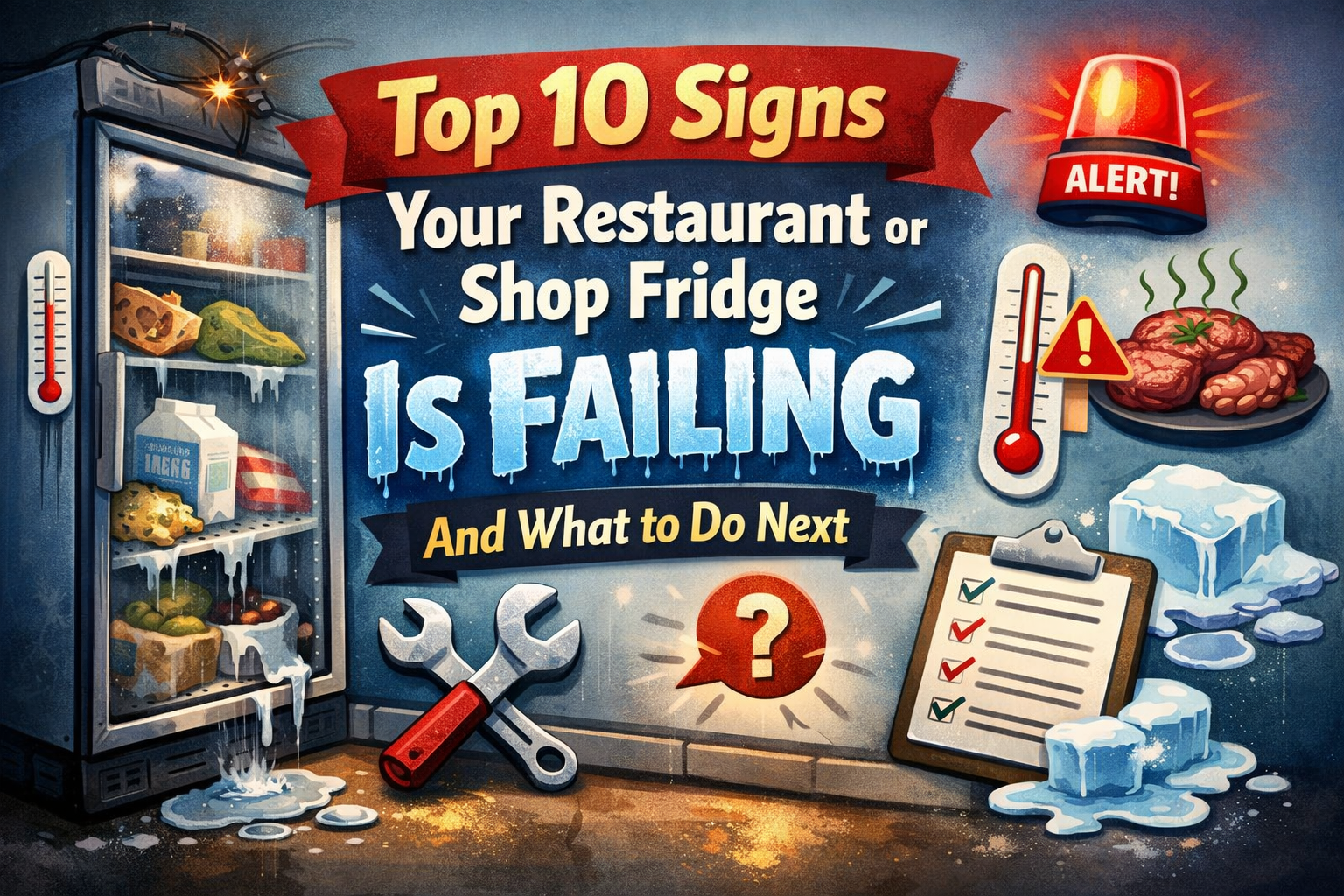
Commercial refrigerators are a top priority in the hospitality and retail sectors to ensure food safety, regulatory compliance, and operational efficiency. Warning signs appear well in advance of complete failure. Early detection is a helpful step in avoiding costs from lost inventory, urgent repairs, and operational downtime.
As commercial refrigeration specialists working with Australian businesses, we see the same problems crop up again and again. Here are the top 10 signs your restaurant or shop fridge is failing, plus what to do next to protect your business.
1. Temperature Fluctuations
If your fridge struggles to maintain a consistent temperature, it’s the clearest red flag.
Common signs include:
- Food freezing in some areas and spoiling in others
- Temperature alarms going off
- Digital displays showing erratic readings
Why it matters:
In Australia, food safety regulations are strict. Inconsistent temperatures can put you at risk of food safety breaches and customer complaints.
What to do next:
Have a technician check the thermostat, sensors, and refrigerant levels before the issue escalates.
2. Excessive Frost or Ice Build-Up
A light layer of frost is normal, but thick ice is not.
Watch for:
- Ice forming on evaporator coils
- Doors sticking shut
- Reduced internal space
What it usually means:
Faulty door seals, blocked airflow, or a failing defrost system.
What to do next:
Turn the unit off and arrange a professional inspection. Ignoring ice build-up increases energy costs and strains the compressor.
3. Unusual Noises Coming from the Fridge
Commercial fridges are noisy, but not that noisy.
Concerning sounds include:
- Loud banging or knocking
- Grinding or rattling
- Constant humming without cycling off
Likely causes:
- Worn compressor components
- Loose fan motors
- Failing bearings
What to do next:
Unusual sounds should never be ignored. Early repairs are far cheaper than replacing a compressor.
4. Rising Energy Bills Without Explanation
If your power bills keep climbing but your usage hasn’t changed, your fridge may be working overtime.
Common reasons:
- Inefficient compressor
- Poor insulation or door seals
- Refrigerant leaks
What to do next:
A performance check can reveal whether servicing or replacing the unit will save you money in the long term.
5. Fridge Running Constantly
A commercial fridge should cycle on and off. If it’s running nonstop, something isn’t right.
Possible causes:
- Dirty condenser coils
- Refrigerant issues
- Faulty thermostat
Why it’s risky:
Continuous operation shortens equipment lifespan and increases the chance of sudden failure during service hours.
6. Leaking Water Around the Unit
Puddles near your fridge are more than only a slip hazard.
Common causes include:
- Blocked or cracked drain lines
- Defrost system faults
- Internal ice melting incorrectly
What to do next:
Leaks indicate internal issues that can damage flooring, stock, and electrical components if left untreated.
7. Food Spoiling Faster Than It Should
If the stock is going off before its use-by date, your fridge may not be cooling evenly or effectively.
Signs include:
- Sour smells
- Discoloured produce
- Dairy products turning early
What to do next:
Have airflow, shelving layout, and temperature distribution checked by a professional.
8. Condensation Inside or Outside the Fridge
Excess moisture is a silent killer for commercial refrigeration.
Look out for:
- Water droplets on shelves
- Foggy glass doors
- Damp packaging
Likely issues:
- Faulty door seals
- High humidity infiltration
- Insulation breakdown
9. Fridge Is Over 8 – 10 Years Old
Commercial fridges work hard in Australian conditions.
Older units suffer from:
- Reduced efficiency
- Obsolete parts
- Higher running costs
What to consider:
Sometimes, ongoing repairs cost more than upgrading to a newer, energy-efficient model.
10. Frequent Breakdowns or Emergency Callouts
If your fridge keeps needing repairs, it’s telling you something.
Warning signs:
- Multiple callouts in a short time
- Temporary fixes that don’t last
- Increasing downtime
What to do next:
A professional assessment can help you decide between repair, refurbishment, or replacement.
What to Do If You Notice These Signs
When it comes to commercial refrigeration, waiting makes things worse.
Smart next steps:
- Stop overloading the unit
- Clean vents and coils (if safe to do so)
- Book a professional inspection
- Keep temperature logs for compliance
- Plan proactive servicing, not reactive repairs
Conclusion
A failing commercial refrigerator can directly impact your business well beyond the repair cost. No hospitality or retail businesses can afford the risk of lost inventory, dissatisfied customers, and unplanned operational downtime.
At Kyabram Refrigeration, we specialise in commercial refrigeration repairs, servicing, and preventative maintenance for restaurants, cafes, and shops across the region. Whether your fridge is showing early warning signs or has stopped working, our experienced team is ready to help.
Call (03) 5852 1212 to book a professional inspection and keep your business running smoothly, before a small issue becomes a major problem.
FAQs
How often should a commercial fridge be serviced?
Most commercial fridges benefit from servicing once or twice a year, but kitchens with heavy use or in hot environments may need more frequent checks. Routine inspections catch small issues early, improve efficiency, and reduce the risk of sudden breakdowns during busy periods.
Can a failing fridge cause food safety issues?
Yes, a failing fridge can quickly create food safety problems. Poor temperature control encourages bacterial growth, shortens shelf life, and risks spoiled stock. This can lead to health hazards, wasted inventory, and serious compliance issues during inspections, as well as regulatory penalties.
Is it better to repair or replace an old fridge?
Whether to repair or replace depends on the fridge’s age, overall condition, and repair history. Occasional fixes are normal, but repeated failures, rising costs, and outdated efficiency mean replacement delivers better reliability and long-term value for commercial operations overall.
Do power fluctuations affect commercial fridges?
Power fluctuations can affect commercial fridges over time. Voltage spikes strain compressors and electronics, while an unstable supply disrupts cooling cycles. Using surge protection and ensuring reliable electrical systems helps prevent damage and unexpected downtime in busy commercial food settings.
How can I extend the life of my commercial fridge?
To extend a commercial fridge’s life, focus on consistent maintenance. Schedule regular servicing, avoid overloading shelves, keep vents clean, and address minor faults promptly. These habits improve performance, reduce wear, and help equipment operate reliably for years without major disruptions.