
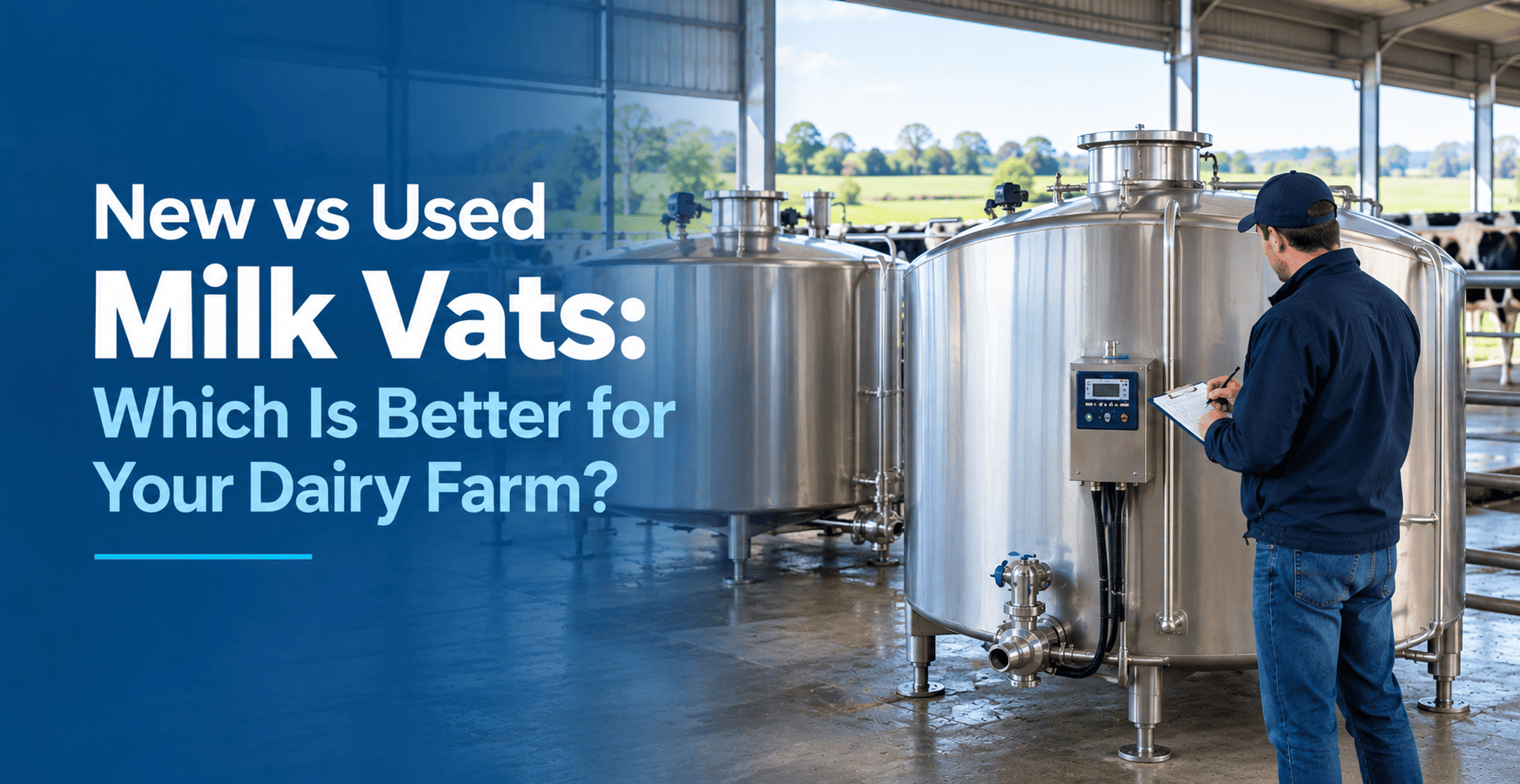
New milk vats come with a full warranty, are based on the latest energy-efficient technology, and have no history of issues, but the disadvantage is that they cost more initially. Used vats, provided they are properly inspected, offer considerable savings and can be just as reliable, especially from well-established brands with a good record of after-sales service. The correct choice will depend on your budget, your timeline, and how tolerant you are of risk.
This question is one of the most frequently asked during farm visits, and, in truth, there is no single correct answer, as it depends on your particular circumstances. Let us properly examine both sides.
The article examines the differences between new and used milk vats by comparing their initial costs, warranty coverage, efficiency, reliability, availability, inspection requirements, and long-term value to help dairy farmers decide which option is suitable for their farm.
The Case for a New Milk Vat
Full Warranty Protection
A manufacturer’s warranty is included with the new vat for both the tank and the refrigeration parts. It covers any problems that may occur in the first few years, eliminating a great deal of the financial risk.
Latest Efficiency Technology
Today’s vats are constructed with improved insulation, have more efficient compressors, and usually incorporate variable-speed drive (VSD) technology, which greatly reduces power consumption compared with earlier models. Over their 20-year lifetime, this can result in considerable reductions in the amount you pay for electricity.
No Hidden History
When you get a new vat, you know exactly what you’re dealing with. There’s no previous wear, no unknown repairs, and no need to guess at how it’s been maintained.
Customisation
When you buy new, you are usually able to choose the exact capacity, configuration, and features that are suitable specifically for your farm, rather than having to make compromises with what is available used.
The Case for a Used Milk Vat
Lower Upfront Cost
It’s the most straightforward case. A used vat of good quality can cost a great deal less than a new one, thereby releasing capital that can be put towards other farm investments, such as expanding the herd, improving infrastructure, or simply paying down debt.
Proven Reliability
Firms such as GEA (Westfalia), Packo, Mueller, and BouMatic have enjoyed decades of proven performance. A used vat that has been well looked after can still have a good deal of useful life remaining.
Faster Availability
New vats, especially those that are large and custom-built, may have long lead times, while a used vat, after being inspected and serviced, can usually be installed and put into operation more quickly.
Good for Growing or New Operations
If you are starting your business, expanding it, or managing a smaller operation, a used vat gives you reliable cooling equipment without stretching your budget on day 1.
What to Weigh Up Before Deciding
- Regarding your timeline, are you in a hurry to have the vat running, or can you wait until a new one is built?
- Should preserving capital be more important right now than achieving long-term efficiency savings?
- Regarding your risk tolerance, would you be at ease with a used vat that has been properly evaluated, or do you prefer the certainty of a new one?
- Will your farm’s expansion mean that it will exceed the capacity of the vat within a few years, no matter if the vat is new or used?
The Real Risk With Used Vats Isn’t the Vat, It’s the Inspection
The reason people are hesitant to purchase used milk vats is the various horror stories, most of which involve private sales in which the vat was not properly inspected prior to purchase. That risk isn’t really due to buying used; it is instead about not carrying out proper due diligence.
When a used vat is sourced from a specialist dairy refrigeration supplier, it’s typically inspected, pressure-tested, and serviced before it goes anywhere near your farm. That changes the risk profile considerably compared to buying blind through a classifieds listing.
What About Resale Value?
Both new and used vats from reputable brands tend to hold value reasonably well in the secondhand market, particularly if serviced regularly and kept in good condition. This is worth factoring in if you upgrade or change your operation size down the track.
Choose the Right Milk Vat
Whether you choose new or used, the right milk vat should match your farm’s budget, production needs and plans.
If you want an honest read on what makes sense for your setup, Kyabram Refrigeration has been helping Victorian dairy farmers weigh up exactly this decision since 1998. We can help you assess both options and understand the costs, risks and practical considerations involved.
Talk to a dairy refrigeration specialist before making your decision, and make sure you invest in a vat that will work reliably for your operation. Go to Kyabram Refrigeration for more information.
Frequently Asked Questions
Is buying a used milk vat risky?
It carries more risk than buying new, but that risk is largely managed through proper inspection, testing, and servicing before purchase, which is standard practice through specialist dairy refrigeration suppliers.
How much cheaper is a used milk vat than a new one?
Savings vary depending on age, condition, and brand, but used vats commonly cost noticeably less than an equivalent new model, sometimes representing significant capital savings.
Do used milk vats come with any warranty?
Reputable suppliers often provide a service warranty or guarantee on used vats after inspection and reconditioning, though this typically differs from a full manufacturer warranty on new units.
How do I know if a used vat is still compliant with dairy regulations?
A proper pre-purchase inspection should confirm that the vat can still cool milk to the required 5°C within regulatory timeframes, and check that the tank and refrigeration system are in sound working order.
Should a new dairy farm start with a new or used vat?
Many new operations start with a used vat to manage upfront costs, then upgrade as production and cash flow grow. This is a common and sensible approach.