
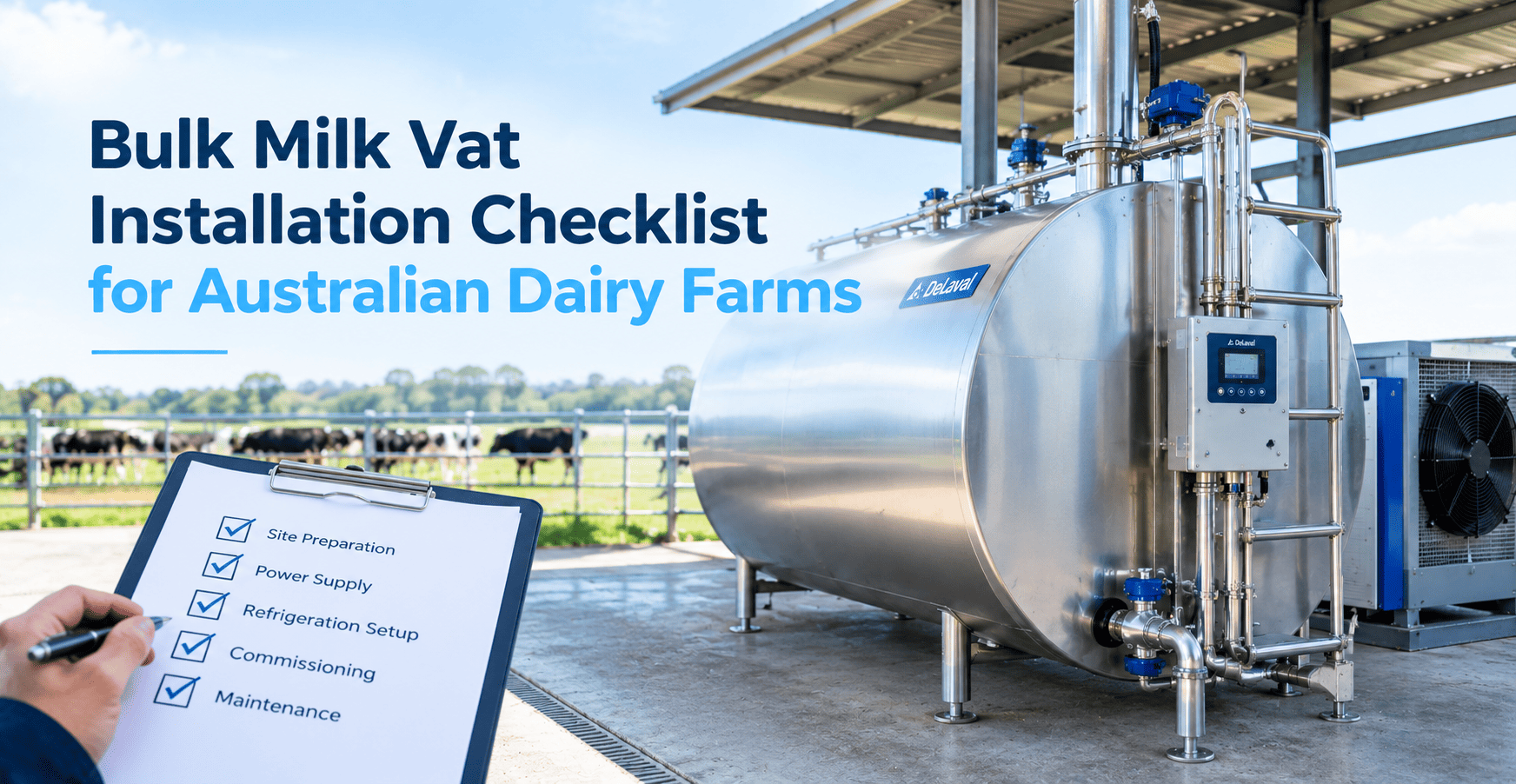
Installing a bulk milk vat correctly is essential for milk quality, energy efficiency and long-term reliability. A properly installed vat cools milk quickly to below 4°C, meets dairy company compliance standards, and runs efficiently for well over a decade. Getting the installation right from day one, including correct sizing, siting, power supply and refrigeration setup, saves Australian dairy farmers thousands in energy costs and avoids milk quality rejections down the track.
Whether you are setting up a new dairy or upgrading an old vat, this guide walks you through everything you need to know before the installers arrive.
This article walks you through the key steps of a proper bulk milk vat installation, from sizing and site preparation to power supply, refrigeration setup, commissioning and ongoing maintenance.
Why Correct Installation Matters
A bulk milk vat is one of the most important pieces of equipment on any Australian dairy farm. It does not just store milk; it protects your entire income stream.
If a vat is poorly installed, farmers can run into:
- Slow cooling times that put milk quality at risk
- Higher power bills from an inefficient refrigeration setup
- Milk company non-compliance issues and potential rejected pickups
- Premature wear on compressors and agitators
Getting the fundamentals right up front means fewer breakdowns and lower running costs over the life of the vat.
Step 1: Choosing the Right Size Vat
Vat capacity should match your herd size, milking frequency and future growth plans, not just your current output.
Things to consider include:
- Current daily milk yield and expected seasonal peaks
- Whether you milk once or twice a day
- Herd expansion plans over the next five to ten years.
- Pickup frequency from your milk processor
A vat that is too small, over time, forces cooling loads and risks overflow. One that is oversized wastes energy cooling excess air space. Brands like GEA, Packo, Mueller and BouMatic all offer a range of sizes suited to Australian dairy operations, from small family farms to large-scale operations.
Step 2: Site Preparation and Location
Where you place the vat has a big impact on performance and ease of use.
Key site considerations:
- A flat, solid concrete base rated for the vat’s full weight when loaded with milk
- Good airflow around the condenser unit to prevent overheating
- Protection from direct sun and dust is particularly important in regional Victoria and northern Australia
- Easy access for the milk tanker and cleaning equipment
- Proximity to the milking shed to reduce pipeline runs
Vat rooms should be well ventilated and, ideally, insulated to reduce the refrigeration load during hot Australian summers.
Step 3: Power Supply and Electrical Requirements
Bulk milk vats draw significant power, especially during the initial pull-down phase. Before installation, farmers should confirm:
- Three-phase power availability, which most vats require
- Adequate switchboard capacity to handle the compressor’s starting load
- Dedicated circuits to avoid overloading shared farm power
- Surge protection is particularly important given Australia’s variable rural power supply.
A licensed electrician should assess your farm’s electrical capacity alongside your refrigeration installer to avoid costly rework later.
Step 4: Refrigeration System Setup
The refrigeration unit is the heart of the vat’s performance. A correctly installed system should include:
- A properly sized compressor is matched to the vat capacity and expected milk volume.
- Well-insulated pipework to prevent efficiency losses
- Correctly calibrated thermostats and controllers
- Glycol or direct-expansion systems are set up according to the manufacturer’s specifications.
Many Australian dairies are now installing heat recovery units alongside their vats, capturing waste heat from the refrigeration cycle to preheat wash water. This is a smart way to cut energy bills further.
Step 5: Commissioning and Compliance Checks
Once installed, the vat needs to be commissioned properly before use. This includes:
- Testing cooling times to confirm milk reaches required temperatures within regulated timeframes
- Calibrating temperature sensors and recording devices
- Checking agitator function and wash cycle performance
- Confirming compliance with your milk processor’s food safety standards
Most Australian milk processors require documentation proving your vat meets cooling and hygiene benchmarks, so keep records from commissioning on file.
Step 6: Ongoing Maintenance Planning
Installation is only the beginning. To protect your investment, plan for:
- Regular servicing of the compressor and refrigeration components
- Seasonal checks before peak summer heat
- Prompt repairs of any unusual noises, slow cooling or error codes
- Working with an ARC-authorised technician for all servicing
Get Your Milk Vat Installed Right, the First Time
A well-installed bulk milk vat protects your milk quality, your compliance standing, and your bottom line for years to come. Kyabram Refrigeration has been supplying, installing and servicing milk vats for Australian dairy farms since 1998, and our team knows exactly what it takes to get your setup right from day one.
If you are planning a new installation, upgrading an old vat, or simply want expert advice on sizing and siting, get in touch with Kyabram Refrigeration today. Call us on (03) 5852 1212 (dairy emergency service: 0417 010 664) today.
For more information, go to kyabramrefrigeration.com.au.
Frequently Asked Questions
How long does bulk milk vat installation take?
Most installations take between two and five days, depending on vat size, site preparation and whether electrical upgrades are needed.
What size milk vat do I need for my dairy farm?
Vat size should be based on your daily milk yield plus a growth buffer, typically calculated with your supplier based on herd size and pickup schedule.
Can I install a second-hand milk vat?
Yes, second-hand vats are common and cost-effective across Australian dairy regions, provided they are inspected, serviced and commissioned by a qualified technician.
Do milk vats need three-phase power?
Most bulk milk vats require three-phase power due to compressor starting loads, so this should be confirmed with an electrician before installation.
How often should a milk vat be serviced after installation?
Most Australian dairy vats benefit from servicing at least twice a year, with additional checks before peak summer periods.