
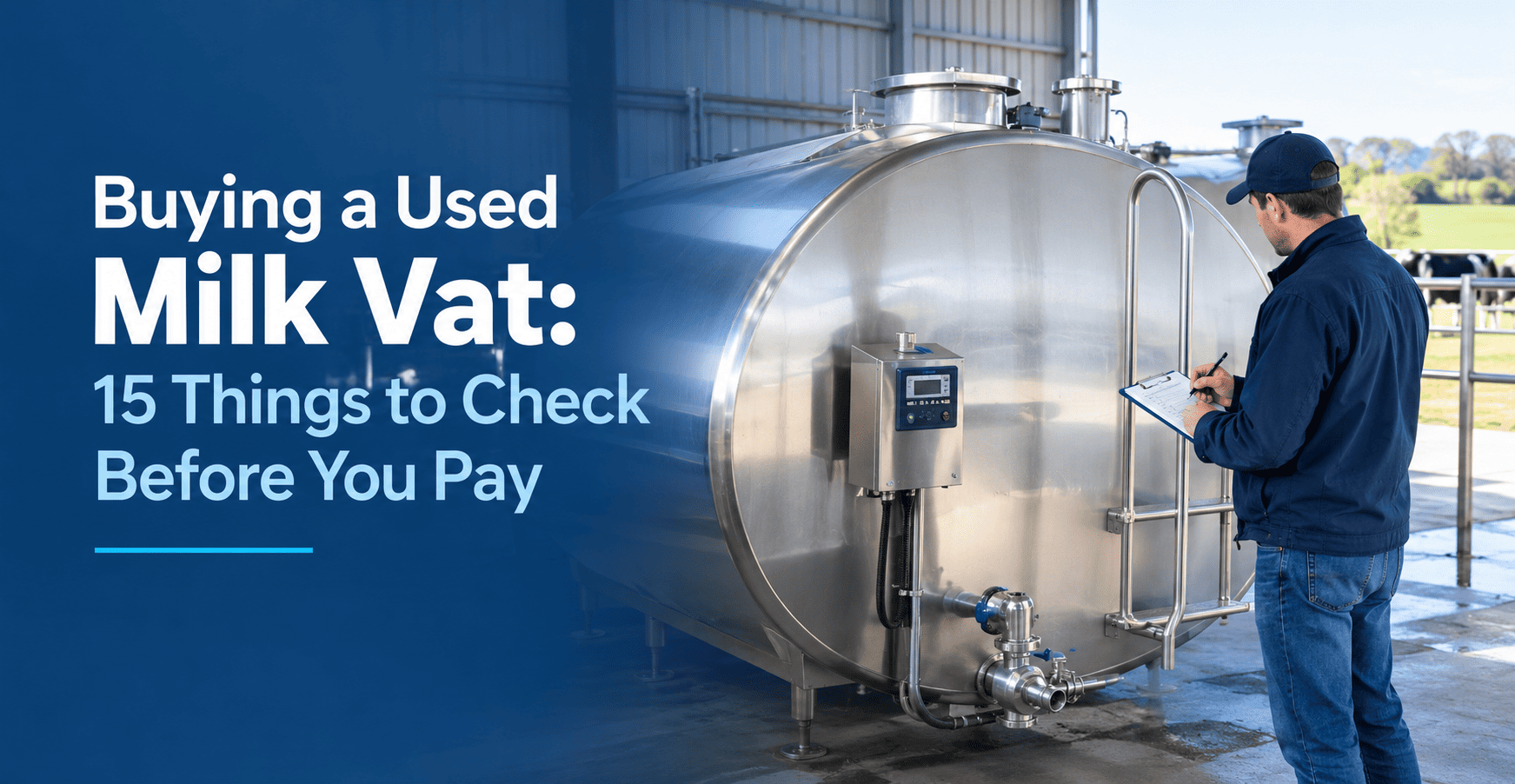
When you are buying a used milk vat, make sure to examine the tank for any signs of corrosion or dents, check the cooling efficiency of the refrigeration system, verify the condition and age of the compressor, inspect the insulation to ensure it is sound, confirm that the agitator is working properly, and ask for the complete service record. Carrying out a thorough inspection of all the major parts will prevent you from experiencing expensive surprises afterwards.
It could be a wise financial decision to buy a used milk vat, but only on the condition that you know exactly what you’re looking at. The following is the full checklist that we go through with farmers before they make a purchase of a used vat.
This article talks about the key checks to make when buying a used milk vat, from tank condition and cooling performance to servicing, electrical components, capacity, and specialist inspection.
1. The state of the tank and the integrity of the stainless steel
Look over both the inside and the outside of the tank for any dents, corrosion, pitting, or scratches that might hold bacteria; stainless steel should appear clean and smooth, especially on the interior surfaces which come into contact with milk.
2. Welds and Seams
Check each welded joint for any cracks or indications of past repairs since poor quality welding can cause leaks or result in structural weakness after a long time.
3. Insulation Performance
Inquire as to the type and condition of the insulation. If the insulation is damaged or has degraded then the refrigeration system has to work harder, which in turn increases power costs and lowers cooling efficiency.
4. The age and condition of the refrigeration unit
The compressor is generally the most costly part to replace; check its age, its brand, and whether it has received regular servicing. A compressor that has been well maintained can still have many years of life remaining.
5. Cooling Performance Test
Whenever possible, ask for or organise a live cooling test to verify that the vat attains the required temperature of 5°C within the prescribed time limits. This is the most important of all the functional checks.
6. Agitator Operation
The agitator avoids the formation of cream and prevents the occurrence of hot spots when the mixture is cooling. Make sure that it is operating smoothly at the right speed and that it is not making any odd noises or vibrating.
7. Records of past services and maintenance
Request to see the service records. Since regular servicing is a good sign of the way the vat has been looked after, any gaps in the records should be a warning.
8. Wash System Function
Make sure that the automatic or manual washing system works properly, including the supply of hot water and the addition of detergent where this is relevant. If the cleaning performance is poor then this will have an effect on compliance with the milk quality standards.
9. Outlet Valve and Fittings
Check the valves, fittings, and seals for any signs of wear, leaks, or corrosion. Although these parts are relatively cheap to replace they should still be taken into account in your assessment.
10. Vat Legs and Stability
Vat legs help keep the vat steady. If the legs are uneven or weak, the vat may wobble or tip. To keep the vat stable, check the legs often and fix any problems right away. This will help keep the vat safe during use.
Make sure that the vat is level and stable on its legs and that there is no rust or any structural weakness which could have an effect on safety or on the alignment of the tank over time.
11. Electrical Components and Wiring
Have a qualified technician check wiring, control panels, and electrical connections for age-related wear, corrosion, or non-compliance with current standards.
12. The condition of the condenser and fan
With air-cooled units, check the condenser coils and the fan motor for any build-up of dust, corrosion, or damage since all of these things decrease cooling efficiency.
13. The availability of brands and parts
Check the brand and model and also verify that spare parts will still be easily available; with some older or discontinued models it can be more difficult to obtain parts later on.
14. Match your capacity to your herd
A vat that has been properly looked after is still not the right one to buy if it does not match the size of your herd and your pickup schedule. You should verify the actual capacity that can be used, not just the stated capacity.
15. A refrigeration specialist carrying out an independent inspection
It’s the one which brings all the other points together; a specialist inspection includes all of the above and has the necessary technical knowledge to identify problems that a simple visual inspection could not.
A Quick Pre-Purchase Checklist
- Request full service history.
- Fix or confirm the cooling performance test.
- Inspect tank, welds, and insulation.
- Check compressor age and condition.
- Make sure that the agitator and wash system are working properly.
- Check whether the parts are available for that brand and model.
- Get an independent specialist inspection before making the payment.
Need to identify a replacement part or assess a vat you’re considering buying?
Have the vat’s brand, model, serial number, and, where possible, the existing part number or a clear photograph available. This makes it far easier for a technician to give you an accurate read on condition and parts availability before you commit to anything.
Need more help?
Buying a used milk vat is a significant investment, and the right checks can help you avoid costly problems later. If you need help identifying replacement parts or assessing a vat before purchase, our team can assist. Have the brand, model, and serial number ready, or a clear photo, and we can help you determine the right parts and assess what to look for before you commit. Go to Kyabram Refrigeration for more information.
Frequently Asked Questions
May I see the used milk vat myself, or is it necessary to have a specialist?
Although a visual inspection can be of some help, only a qualified technician can properly evaluate the refrigeration performance, the condition of the compressor, and the electrical safety, especially since these components are so expensive to replace.
What is the most serious warning sign when having a used milk tank examined?
The main concern is a refrigeration unit which has not been recently tested, together with no service history, since this makes it difficult to assess the actual condition of the most expensive parts.
What is the usual cost of a pre-purchase inspection?
Costs vary, but the inspection fee is generally small compared to the cost of discovering a major fault after purchase, making it a worthwhile investment either way.
Should I still buy a used vat if it fails part of the inspection?
It depends on the issue. Minor fixable items like valves or seals aren’t usually deal-breakers, but a failing compressor or significant corrosion should factor heavily into your price negotiations or decision to walk away.
Do used milk vats need to meet the same dairy compliance standards as new ones?
Yes. Regardless of age, the vat needs to reliably cool milk within regulation timeframes to remain compliant with dairy food safety standards.